Table of Contents
- Preventing Lock Damage During Emergency Entry: A Step-by-Step Guide
- Step 1: Assess the Lock and Door Before You Touch Anything
- Step 2: Try Non-Destructive Methods First
- Step 3: Know When to Stop and Call a Professional
- Non-Destructive Entry Techniques That Protect Your Lock and Frame
- Emergency Locksmith Response Time Expectations: What to Expect When You Call
- Locksmith Emergency Call-Out Costs: What Affects the Price You Pay
- Preventative Maintenance That Stops Lock Damage Before It Starts
- Emergency Exit Hardware and Legal Requirements for Fire Doors
- Frequently Asked Questions
Last Updated: September 16, 2026
Preventing Lock Damage During Emergency Entry: A Step-by-Step Guide
Lock damage is the hidden cost of a rushed emergency entry. When you are locked out at 2 AM, the method used in those first few minutes often decides whether you pay for a simple opening or a full lock and door replacement. This guide from M&C Locksmith walks through preventing lock damage during emergency entry, from assessing the door to knowing when to call a professional.
Step 1: Assess the Lock and Door Before You Touch Anything
Before any tool touches the door, identify the lock type, door material, and door swing, these determine which entry methods are safe and which will cause damage.
Check these five things first:
- Lock type – A mortice deadlock, cylinder lock, and night latch each need different handling. Forcing a mortice deadlock with the wrong tool can shear the internal mechanism.
- Door material – uPVC frames crack; timber frames dent and split.
- Door swing and hinges – If hinges are exposed outside, they may be a cleaner access point than the lock.
- Weather and lighting – Cold makes metal brittle and plastic trim snap. Poor light leads to scratched frames and missed latch points.
- Signs of existing wear – A stiff latch or wobbly handle means the lock is already stressed and will fail faster under force.
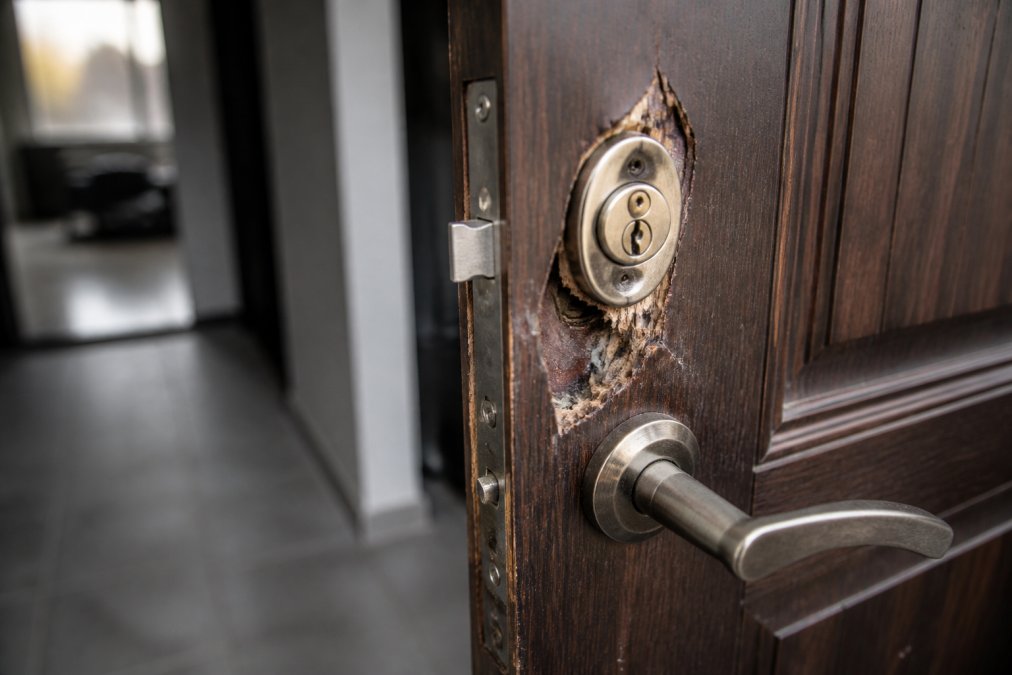
The most common mistake is reaching for a crowbar or screwdriver first. Use against a uPVC or composite frame almost always cracks the frame or bends the door, turning a lockout into a full door replacement.
Step 2: Try Non-Destructive Methods First
Non-destructive entry should always be the first line of attack. These methods work with the lock’s mechanics rather than against them, so the cylinder, latch, and frame stay undamaged.
- Single-pin picking – Manipulates each pin individually. Slow, but leaves no trace on a standard pin tumbler lock.
- Raking – A faster picking motion. Works on lower-security cylinders but can wear pins if overused.
- Bypass tools – Slip past the latch rather than picking the cylinder. Effective on spring latches, not deadbolts.
- Shimming – A thin shim slides between the latch and strike plate to release a spring latch. No lock damage when done correctly.
- Impressioning – A blank key maps the pin positions. Common for older or worn locks.
Step 3: Know When to Stop and Call a Professional
There is a clear point where DIY attempts start costing more than a call-out. If you have spent ten to fifteen minutes without progress, or the lock is a high-security cylinder, stop.
Call a professional when:
- The lock is a high-security or anti-pick cylinder
- The door is uPVC, composite, or has a multi-point locking system
- You have already bent, scratched, or stressed any part of the lock or frame
- The property is commercial and contains stock, equipment, or sensitive records
- You are unsure of the lock type and risk causing structural damage
Non-Destructive Entry Techniques That Protect Your Lock and Frame
Non-destructive entry is any method that opens a lock without damaging the cylinder, latch, or door. The right technique depends on the lock and door material, so material-specific knowledge matters as much as the tools.
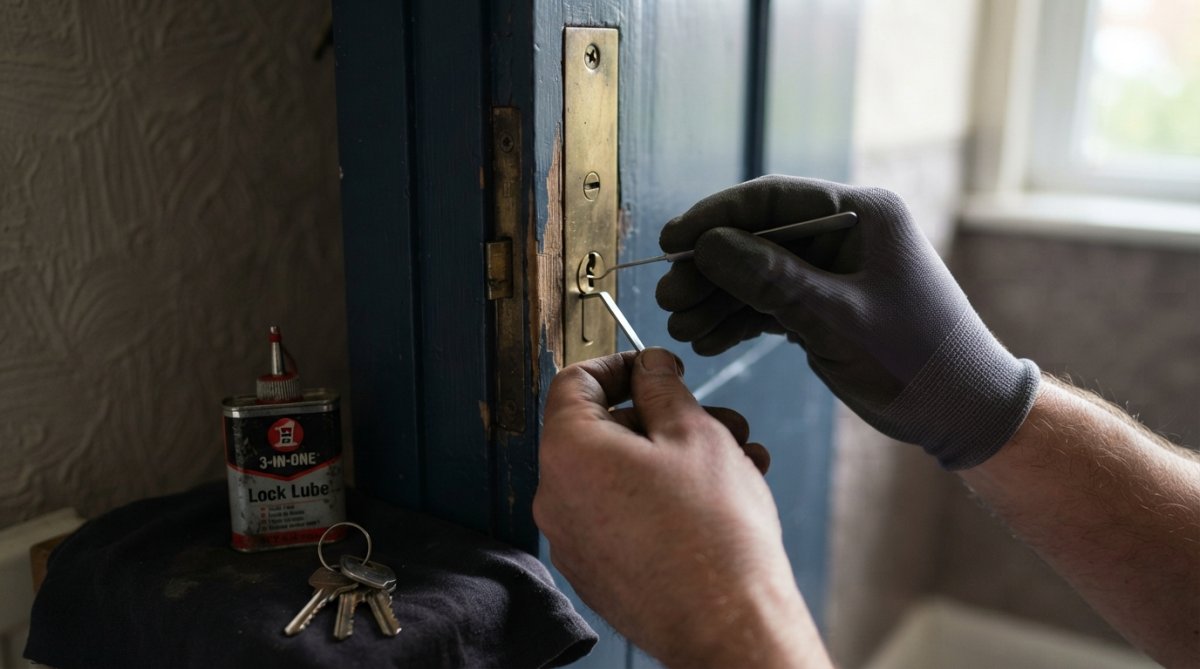
Material-Specific Damage Prevention: uPVC, Timber, and Composite Doors
Each door material fails in its own way, and preventing lock damage during emergency entry means knowing which failure to avoid.
- uPVC doors – The frame is the weak point. Never lever against it. Use cylinder-based methods only, and protect the trim with tape if any tool rests against it.
- Timber doors – The wood dents and splits under pressure, and old timber can be brittle. Non-destructive picking and shimming keep the frame and latch intact.
- Composite doors – Forcing them damages the multi-point locking gearbox, which is expensive to replace. Professional assessment is the safer route.
On uPVC and composite doors, the locking gearbox and multi-point mechanism are the costly parts, not the cylinder. A method that saves the cylinder but stresses the gearbox is a false economy.
Emergency Locksmith Response Time Expectations: What to Expect When You Call
Response time is the number most people fixate on when standing outside in the cold, but it is also the most likely to be misrepresented. Understanding how a genuine emergency locksmith prioritises jobs helps you judge whether the arrival window you are given is realistic or a sales line.
How emergency jobs are actually triaged
A reputable provider sorts calls into three tiers:
- Genuine emergency – Someone is locked out with no other access, a vulnerable person is inside, or a business cannot secure premises. Dispatched first.
- Urgent but not critical – A lock has failed but a second entrance works, or the property is already secure. Slotted around emergencies.
- Booked work – Lock changes, upgrades and maintenance, scheduled into normal hours.
If you are told a van is ‘five minutes away’ the moment you call, ask whether that is a dispatched engineer or a call-centre script. A real dispatch gives you the engineer’s name and a realistic window.
What actually shapes the arrival window
- Distance from the nearest engineer, not the nearest office – A firm with a single base may still be closer than a national brand routing you through a central call centre.
- Time of day – Late-night and early-morning calls have fewer engineers on the road. Peak evening hours (roughly 5pm to 8pm) are often the busiest.
- Weather and road conditions – Ice, flooding and road closures add real time no provider can magic away.
- Job complexity ahead of you – If the engineer is finishing a multi-point lock replacement, your ’20 minutes’ can become 40.
- Access to your property – A gated estate, a communal entry door or a parking restriction all add minutes on arrival.
Questions that expose an honest provider
Before you agree to anything, ask:
- How long until the engineer arrives, and can you text me their name?
- What is the call-out fee, and is it separate from the labour?
- Will the price change once the engineer sees the lock?
- If the job needs parts, are they carried on the van or ordered in?
- Is there a night or weekend premium, and how much is it?
A transparent provider answers all five before setting off. If any answer is vague, call the next firm.
The trade-off nobody mentions
If you are not in immediate danger and the property is secure, a next-morning appointment during standard hours can cost meaningfully less than a 3am call-out, and the engineer will be less rushed, which protects your hardware.
M&C Locksmith provides an honest arrival window and the engineer’s details when you call, so you know exactly who is coming and when.
Locksmith Emergency Call-Out Costs: What Affects the Price You Pay
Most people searching for emergency entry advice are quietly asking a second question: what is this going to cost me? The price of an emergency opening is driven less by the lockout itself and more by the method used to resolve it, and that is where destructive entry quietly becomes the most expensive option.
The real cost comparison: destructive vs non-destructive
A destructive entry looks cheaper on the call-out quote because it is faster. It rarely is cheaper overall.
| Approach | Typical immediate cost | Hidden follow-on cost | Long-term outcome |
|---|---|---|---|
| Destructive entry (drill, snap, force) | Lower call-out, quicker job | Replacement cylinder, latch or full lock set; possible door and frame repair | New hardware, new keys, possible insurance paperwork |
| Non-destructive entry (picking, bypass, impressioning) | Slightly higher labour, longer job | None if done correctly | Original lock and keys retained, no rekeying |
What actually drives the price
- Time of call – Out-of-hours, weekend and bank holiday calls carry a premium. Ask for the premium as a figure, not a percentage.
- Lock type – A standard night latch is quick. A high-security anti-pick cylinder or a multi-point system takes longer and needs different tools.
- Door material – uPVC and composite doors demand more care; timber is more forgiving but older timber splits easily.
- Access method – Non-destructive entry needs more skill and time, reflected in labour, not parts.
- Parts – If a cylinder, latch or handle needs replacing, ask for the part price upfront and whether it is like-for-like or an upgrade.
- Travel and parking – Congestion charges, parking restrictions and distance can appear as line items. Ask whether they are included.
How to read a quote without being caught out
A trustworthy quote separates three things: the call-out fee, the labour for the opening, and the cost of any parts. If a provider quotes a single figure before seeing the lock, treat it as an estimate at best. If they refuse to confirm the figure before starting work, walk away.
A very low headline call-out fee is often recovered through parts mark-up or a ‘the lock was harder than expected’ surcharge on arrival. The cheapest quote is rarely the cheapest job.
The long-term saving of doing it properly
A non-destructive opening preserves the cylinder, latch, gearbox and frame, no rekeying, no new keys, no insurance claim, and no follow-up visit when stressed hardware fails. Over the life of a door, one careful opening versus one forced opening can easily exceed the cost of several standard call-outs.
Preventative Maintenance That Stops Lock Damage Before It Starts
Preventative maintenance is the cheapest way to avoid lock damage, and most homeowners skip it entirely. A lock that is lubricated, aligned, and free of worn parts resists damage far better when an emergency happens.
Simple habits that protect your locks:
- Lubricate cylinders and latches every six months with a dry graphite or silicone spray, not oil
- Check that the door closes without lifting or forcing, which signals misalignment
- Tighten handle screws and strike plates quarterly
- Watch for a stiff key or sticky latch, both early signs of worn-out components
- Keep a spare key with a trusted neighbour rather than hiding one outside
- Book a professional assessment every couple of years for older locks
A stiff key or a latch that needs a nudge is the earliest warning of mechanical failure. Addressing it early costs far less than an emergency entry on a seized lock.
Emergency Exit Hardware and Legal Requirements for Fire Doors
Emergency exit hardware on fire doors is governed by law, and getting it wrong creates both a safety risk and a compliance problem. Panic bars, also called push bars, must allow keyless exit so anyone can leave quickly in an emergency.
Frequently Asked Questions
Can a locksmith open a door without damaging the lock?
Yes, in most cases. A trained locksmith uses non-destructive entry techniques such as lock picking, bypass tools, or decoding to open a door without harming the lock or frame. These methods work well on standard mortice deadlocks, uPVC doors, and most residential cylinders. Damage usually only happens when the lock is already worn, seized, or the wrong tools are used. If you are locked out, call a professional who can assess the lock first and confirm whether non-destructive entry is possible before any drilling or force is applied.
What is the difference between destructive and non-destructive entry?
Non-destructive entry opens a lock without causing damage, using picks, bypass tools, or decoding. Destructive entry involves drilling the cylinder, snapping the lock, or forcing the door, which often means the lock and sometimes the door frame need replacing. Non-destructive methods cost less overall because you keep your existing hardware and avoid repair bills. Destructive entry is only necessary when the lock is broken, seized, or the property is unsafe. Ask your locksmith which method they plan to use before work starts so you know what to expect.
How do I find a reliable locksmith for emergency entry?
Look for a locksmith who confirms pricing upfront, has liability insurance, and can explain how they will open your door before they start. Ask for identification verification and check whether they cover your area. A reputable locksmith will not pressure you into unnecessary replacements and will use non-destructive entry techniques where possible. M&C Locksmith has over two decades of experience and offers transparent, upfront pricing. For emergency lockouts, call a local provider who can give you a realistic response time before you commit.
What should I do if I am locked out of my home?
First, check all other entry points and whether a spare key is with a neighbour or family member. If not, call a local locksmith and ask for a clear price and response time before they set off. Avoid forcing the door yourself, as this often causes frame damage and turns a simple lockout into a costly repair. Once inside, ask the locksmith to check the lock for wear and lubricate moving parts. M&C Locksmith offers 24/7 emergency lockout services with upfront pricing and a 10% senior discount.